 By Khizar seo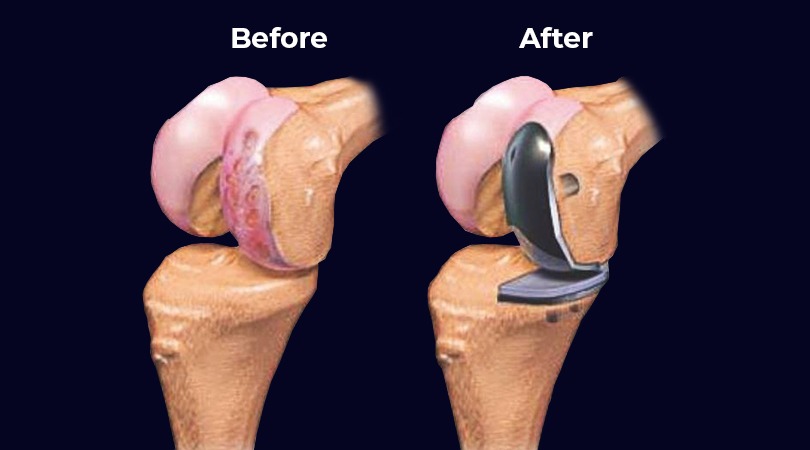
Living with knee pain can impact your daily life greatly. Stairs get tricky, long walks become rare, and even sleep can be interrupted. For many people with advanced arthritis or joint damage, knee replacement is a proven way to regain comfort and movement. Over the decades, surgical techniques and implant designs have steadily improved, giving patients safer procedures and more predictable outcomes.
Among today’s options, Minimal invasive total knee replacement (Total Knee Arthroplasty) has earned attention because it uses a smaller incision and causes less soft-tissue disruption than the traditional approach.
The promise is simple: relieve pain, restore function, and help you get back to daily life, ideally with less post-operative soreness and a quicker return to activity. Evidence shows the short-term recovery can indeed be smoother for suitable candidates, while long-term results are comparable to the standard technique.
It primarily changes how the joint is accessed, not what is replaced. In both standard and minimally invasive total knee replacement, surgeons remove damaged cartilage and a small amount of bone from the femur (thigh bone), tibia (shin bone), and sometimes resurface the underside of the kneecap; metal components with a medical-grade plastic spacer recreate smooth, gliding joint surfaces.
The minimally invasive method uses a shorter skin incision and “quadriceps-sparing” or limited-split muscle techniques to expose the joint with less soft-tissue cutting. The implants themselves are the same as in traditional surgery.
Best candidates are generally thinner, younger, medically healthier, and motivated for rehab, with knees that are not severely deformed. People with significant varus/valgus deformity, very muscular thighs, extensive prior knee surgery, or conditions that impair wound healing may be better served by a standard approach. Your surgeon weighs anatomy, health status, and goals before recommending a technique.
Often yes in the early weeks, because less disruption of soft tissues can mean less pain and a quicker return to basic activities. Several studies report earlier functional gains with quadriceps-sparing or other limited-exposure techniques, especially during the initial recovery window. However, short-term wins don’t automatically translate into better long-term outcomes; by months to years, pain relief and function are similar to traditional methods.
Longevity depends on the implant and your activity profile, not the incision size. Modern knees are highly durable: more than 90% are functioning well at 15 years, and registry data suggest many last 20–25 years or longer. Protecting your new joint through low-impact activity, weight management, and fall prevention helps extend its life.
Robotic or navigated tools can aid precise bone cuts and implant positioning, and they may be combined with either standard or minimally invasive exposure. While precision is appealing, long-term advantages over well-performed manual techniques are still being studied. The fundamentals like good alignment, stable soft tissues, and diligent rehab are responsible for the overall outcome.
Total Knee replacement using minimally invasive techniques include the following steps:
- Anesthesia: Spinal or general, sometimes with nerve blocks for early pain control.
- Exposure: Shorter skin incision; soft-tissue-sparing approach when feasible.
- Bone preparation: Damaged surfaces on femur and tibia are removed.
- Implantation: Metal components are cemented or press-fit; the kneecap underside may be resurfaced.
- Spacer: A plastic insert creates low-friction movement.
- Closure & recovery: Early mobilization, structured PT, and home safety planning.
It is important to follow certain guidelines to get the best possible results:
- Prehab & conditioning (strengthen quads/hips, practice gait aids).
- Medical optimization (blood sugar control, stop smoking, manage skin issues).
- DVT prevention (early walking, compression, and prescribed blood thinners).
- Infection prevention (pre-op skin prep, antibiotic timing, wound care).
The cost for a minimally invasive total knee replacement in India typically ranges from ₹2,50,000 to ₹6,00,000 per knee. The final price varies depending on factors like the type of implant used, the specific hospital, the surgeon’s fees, and the city where the procedure is performed.
Factors influencing cost:
- Private hospitals generally have higher costs than public hospitals. The choice of hospital can also depend on the city, as costs vary between major cities and smaller towns.
- A surgeon’s experience and expertise can influence the overall cost.
- The brand and quality of the implant can affect the price.
- Pre- and post-operative care includes costs for diagnostic tests, physiotherapy, medication, and follow-up appointments.
- The duration and type of hospital room chosen will add to the total cost.
Note: Minimally invasive techniques don’t automatically mean higher or lower charges, the main cost drivers are implants, hospital stay, and service tier.
It’s often easier early on, with less immediate pain and quicker basic mobility, but long-term results are similar when surgeries are done well. Technique choice should fit your anatomy and health profile.
Most modern knees last 15–20 years or more, and large registry analyses show many exceed 25 years. Longevity depends on implant design, alignment, activity level, weight, and overall health.
Infection, blood clots, wound-healing problems, nerve or vessel injury, stiffness, and (rarely) implant malposition or loosening over time. Minimally invasive exposure does not remove these risks but may reduce early soft-tissue pain.
Not always. Surgeons decide based on cartilage wear and bone thickness under the kneecap; resurfacing is avoided if the bone is too thin.
Either spinal or general anesthesia (sometimes with nerve blocks). Your team will recommend the safest option for your health status.
Often 3–6 weeks for automatic cars (right-knee surgery may take longer), once you are off strong pain medicines and can brake reliably. Desk work may resume in 2–6 weeks; more physical jobs take longer. Timelines vary with progress in therapy. (General guidance aligned with major medical references.)
Not by itself. The quality of alignment, ligament balance, and rehab matter more than incision length. A well-done traditional TKA can perform just as well as a minimally invasive one over the long haul.
High-impact activities (running, jumping) are generally discouraged to limit wear. Low-impact options like walking, cycling, swimming are recommended to keep your knee and overall health in good shape.
Minimally invasive total knee replacement can deliver a more comfortable early recovery for the right patient, without sacrificing the durable, long-term benefits of modern knee implants. The most important success factors are surgeon experience, appropriate patient selection, precise alignment, and committed rehabilitation. If you’re considering surgery, ask your orthopaedic surgeon which approach matches your anatomy and goals, and how their outcomes compare for both techniques.
 Torin
Torin