 By Torin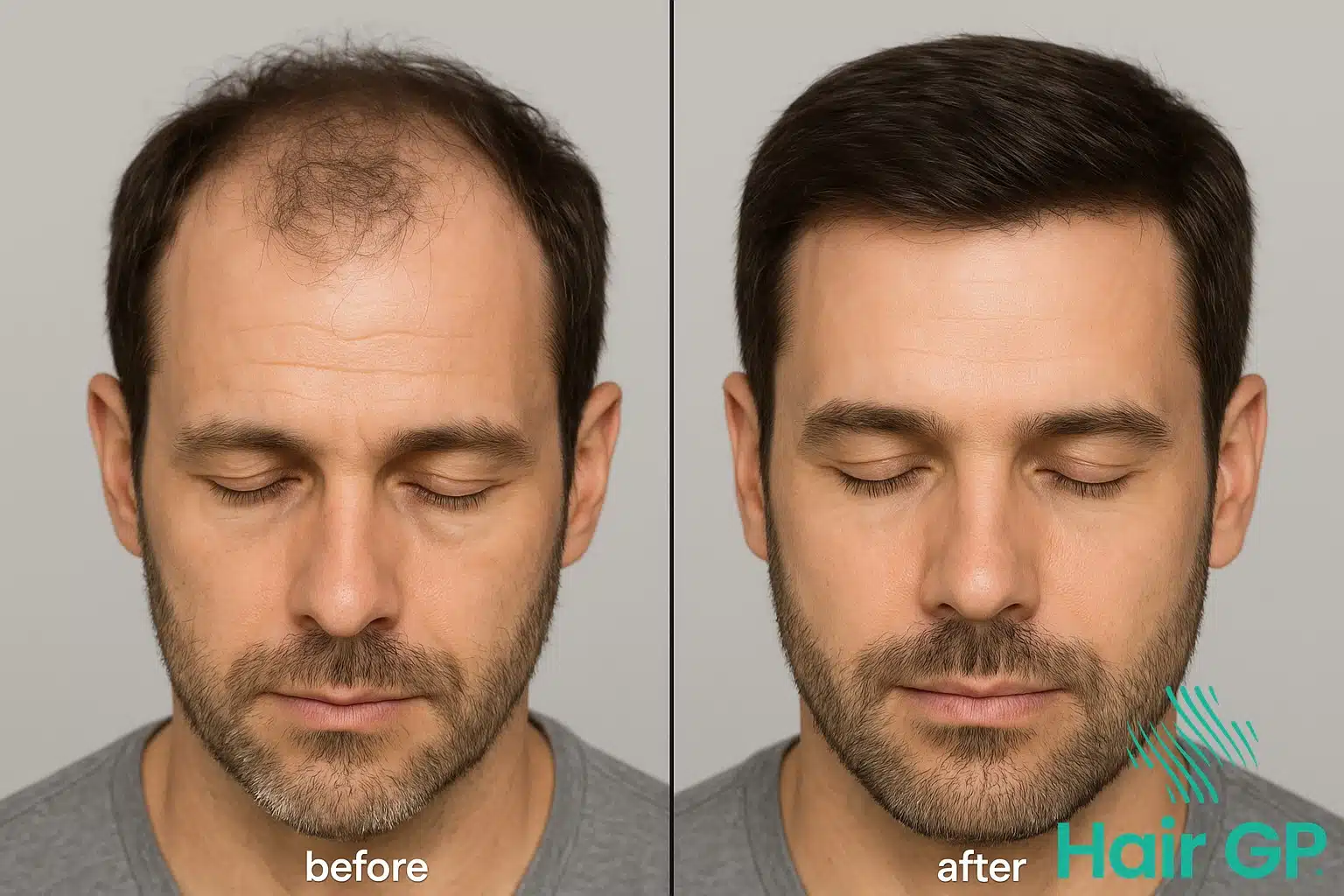
Hair loss is rarely just about the number of strands on a pillow. For many people, it starts quietly: a wider parting, thinner temples, reduced density at the crown, more scalp showing after a shower, or hair that no longer feels as full as it used to. That is when patients often start searching for oils, supplements, shampoos, and quick fixes before they understand what is actually happening. A medically guided PRP hair restoration treatment can be useful in selected cases because it works with the patient’s own platelet-rich plasma to support follicle activity, scalp recovery, and hair density over time.
The treatment involves drawing a small amount of the patient’s blood, processing it to isolate platelet-rich plasma, and injecting it into targeted areas of the scalp. It also notes that PRP may be considered for concerns such as early-stage hair thinning, androgenetic alopecia, and post-hair-transplant support, depending on the patient’s suitability.
The key phrase is “depending on suitability”. PRP is not a magic injection for every type of hair fall. It works best when the cause, stage, scalp condition, and treatment plan are properly assessed first.
Patients often describe everything as “hair fall”, but dermatologists do not treat hair loss as one broad issue.
Hair shedding after a fever is different from patterned thinning. Patchy hair loss is different from dandruff-related shedding. Hair breakage is different from follicle miniaturisation. Scalp inflammation is different from nutritional deficiency.
PRP makes more sense when the diagnosis fits.
A dermatologist may first look for:
- Patterned hair thinning
- Family history of hair loss
- Sudden shedding
- Patchy bald areas
- Scalp itching or scaling
- Dandruff or inflammation
- Hormonal triggers
- Post-illness shedding
- Medication history
- Nutritional gaps
- Hair care practices
- Previous treatments tried
That first step matters because PRP supports follicles. It cannot correct every reason hair is falling out.
PRP stands for platelet-rich plasma. It comes from the patient’s own blood.
The process usually involves drawing blood, placing it in a centrifuge, separating the blood components, collecting the platelet-rich layer, and injecting it into targeted areas of the scalp.
Cleveland Clinic describes platelet-rich plasma as a treatment made from a person’s own blood, with platelets concentrated before being injected into tissue where their growth factors may support healing and symptom improvement.
In hair treatment, the aim is to deliver platelet-derived growth factors near weakened follicles. These growth factors may help improve the scalp environment, support follicle activity, and encourage thicker-looking growth in suitable candidates.
It is still a medical procedure, not a salon therapy.
PRP is most often discussed for androgenetic alopecia, commonly called male or female pattern hair loss. In this condition, hair follicles gradually miniaturise. The hair becomes thinner, weaker, and shorter over time.
PRP may help by supporting follicles that are still active but weakened.
It may contribute to:
- Improved follicle stimulation
- Better hair shaft thickness
- Reduced shedding in some patients
- Improved scalp healing response
- Support for early thinning areas
- Better density when used as part of a broader plan
Clinical literature generally suggests PRP can be a promising option for androgenetic alopecia, although results vary because preparation methods, protocols, patient selection, and treatment schedules differ between studies.
This is why patients should be cautious of any clinic promising guaranteed regrowth after one session.
PRP cannot revive areas where follicles are already permanently lost. That is an important point.
If the scalp area is completely bald and follicles are no longer active, PRP is unlikely to create new hair from nothing. It is more useful when hair is thinning, but follicles are still present.
This is why early evaluation matters.
A patient with early crown thinning may be a better candidate than someone with long-standing shiny bald patches. A patient with diffuse thinning may need blood tests and medical management first. Someone with scarring hair loss may need a different plan entirely.
PRP is not the first answer for every scalp.
Hair does not grow in isolation. The scalp environment matters.
Inflammation, dandruff, seborrhoeic dermatitis, folliculitis, psoriasis, itching, or repeated irritation can affect comfort and hair quality. If the scalp is inflamed, simply injecting PRP without managing the underlying condition may not be enough.
A dermatologist may first need to control:
- Dandruff
- Scalp itching
- Scaling
- Redness
- Follicle inflammation
- Infection
- Product irritation
- Excessive oil buildup
- Scratching-related damage
This is why a scalp examination should come before treatment planning.
PRP can support scalp recovery, but it should not be used as a shortcut around diagnosis.
A responsible dermatologist will not treat PRP as the only tool for every patient.
Depending on the diagnosis, PRP may be combined with:
- Medical hair loss treatment
- Anti-dandruff or anti-inflammatory scalp care
- Nutritional correction
- Lifestyle review
- Hair care changes
- Post-transplant support
- Follow-up monitoring
- Maintenance sessions
For androgenetic alopecia, medications such as minoxidil or other doctor-prescribed treatments may be discussed depending on the patient. For shedding related to deficiency or illness, correction of the cause may be more important than PRP alone.
The strongest results usually come from matching the treatment to the diagnosis.
PRP may be considered for patients with early or moderate thinning, especially when the follicles are still active.
Suitable candidates may include people with:
- Early patterned hair loss
- Thinning at the crown
- Mild to moderate density reduction
- Hair miniaturisation
- Ongoing shedding with active follicles
- Post-hair-transplant healing support
- Patients looking for a non-surgical option
- Patients are willing to follow a multi-session plan
Suitability depends on medical history, scalp examination, expectations, and diagnosis.
A patient should not decide suitability based only on before-and-after photos. Those photos may not reflect their hair loss type, stage, age, health, or treatment combination.
PRP may not be the right option for everyone.
It may have limited value in:
- Long-standing complete baldness
- Scarring alopecia without active follicles
- Untreated scalp infection
- Severe uncontrolled dandruff or inflammation
- Hair loss caused by an unresolved medical condition
- Nutritional deficiencies not corrected
- Unrealistic expectation of instant regrowth
- Patients are unable to complete multiple sessions
- Certain blood or platelet disorders
- Patients on specific medications, depending on medical advice
A proper consultation should include a candid discussion of these limits.
If a clinic makes PRP sound suitable for everyone, that is a warning sign.
PRP is not generally a one-session treatment. Hair growth cycles are slow, and follicle response takes time.
Many protocols use multiple sessions spaced weeks apart, followed by maintenance if the patient responds well. Velantis notes that the number of sessions depends on the extent of hair loss and the patient’s treatment plan.
Patients should understand this before starting.
A good clinic should explain:
- How many initial sessions may be recommended
- How far apart may sessions be spaced
- When will the review happen
- Whether maintenance may be needed
- What signs of response to look for
- What results are realistic
- What happens if the response is limited
Without that clarity, PRP can become an expensive guessing game.
Patients often expect visible regrowth first. In reality, early changes may be subtler.
Some patients may notice:
- Reduced shedding
- Better scalp comfort
- Less visible thinning over time
- Improved hair thickness
- Better density in treated areas
- Slower progression of thinning
- Fuller feel during styling
Visible improvement usually takes time because hair grows gradually. A patient looking in the mirror every day may miss small changes. This is why standardised photos can help track progress.
The dermatologist may compare baseline images with follow-up images after a planned treatment cycle.
One of PRP’s potential benefits is improvement in hair calibre. This means existing hair strands may appear thicker or stronger in responders.
This is important because patients often think only in terms of new hair. But density is influenced by both the number of hairs and the thickness of each hair shaft.
If miniaturised follicles produce slightly thicker strands, the scalp may appear fuller even without dramatic new growth.
Research in androgenetic alopecia has reported improvements in hair density and diameter in PRP-treated areas, though study results and protocols vary.
That variation is why patient selection and technique matter.
Some patients consider PRP after a hair transplant. The aim is usually to support healing and improve the scalp environment around grafted areas.
PRP is not a replacement for transplant surgery when transplantation is truly needed. It may be used as a supportive treatment in selected cases.
A dermatologist or hair restoration specialist may discuss PRP after transplant to support:
- Scalp recovery
- Graft-area healing
- Existing hair health
- Overall density planning
- Maintenance of non-transplanted hair
Patients should ask whether PRP is being recommended for graft support, native hair maintenance, or broader scalp health. Those are related, but not identical, goals.
PRP involves blood processing and injections. Clean technique matters.
A proper PRP session should include:
- Medical consultation
- Blood draw
- Sterile handling
- Centrifuge processing
- Targeted scalp preparation
- Injection into planned areas
- Post-procedure instructions
- Follow-up guidance
Because PRP uses the patient’s own blood, the risk of allergic reaction is generally low. However, injections can still cause discomfort, swelling, tenderness, bruising, or temporary scalp sensitivity.
Sterility and clinical protocol are not optional.
PRP costs vary depending on clinic setup, doctor expertise, equipment, number of sessions, area treated, and whether additional treatments are included.
Velantis notes that PRP hair treatment cost in Chennai generally falls between ₹4,500 and ₹14,000 per session, with the final amount depending on clinic and treatment-plan factors.
Patients should not choose based only on the lowest price. PRP quality depends on preparation, technique, hygiene, candidate selection, and follow-up planning.
A very low price with unclear medical supervision should make patients cautious.
A good PRP consultation should not sound like a guarantee.
It should explain:
- Your type of hair loss
- Whether PRP suits your stage
- What results are realistic
- How many sessions may be needed
- Whether medicines are also needed
- What side effects can happen
- How progress will be measured
- What maintenance may involve
- What happens if you do not respond well
Harvard Health notes that evidence is stronger for androgenetic alopecia than for several other hair loss types, and that there is not enough evidence to draw strong conclusions for conditions such as telogen effluvium, alopecia areata, or scarring hair loss.
That is exactly why diagnosis matters before PRP.
Before committing, patients should ask direct questions.
Useful questions include:
- What type of hair loss do I have?
- Am I a good candidate for PRP?
- What stage is my hair loss?
- Are my follicles still active?
- Do I need blood tests?
- Do I have scalp inflammation?
- How many sessions do you recommend?
- What result is realistic for me?
- Will I need maintenance?
- Should PRP be combined with medication?
- How will progress be tracked?
- What are the side effects?
- What happens if I do not respond?
A good clinic should answer without rushing or overselling.
Sometimes PRP may need to be delayed.
That may happen if:
- The scalp is infected
- Severe dandruff or inflammation is uncontrolled
- A medical cause needs investigation
- Blood tests show deficiencies that need correction
- Hair loss is sudden and unexplained
- The patient has unrealistic expectations
- The patient cannot complete the recommended sessions
- Another diagnosis needs priority treatment
Delaying PRP is not a bad sign. It may mean the dermatologist is planning responsibly.
PRP therapy can support hair regrowth and scalp health when it is used for the right patient, at the right stage, with the right diagnosis. It may help improve density, hair thickness, follicle activity, and scalp recovery in suitable cases, especially early or moderate androgenetic alopecia.
But PRP is not a universal cure for every type of hair fall. It should not be sold as a quick fix, a guaranteed regrowth method, or a replacement for proper diagnosis. The smartest approach is to begin with a dermatology consultation, understand the cause of hair loss, check scalp health, and decide whether PRP belongs in the treatment plan.
For patients considering PRP, the goal should be clarity first and treatment second. When the cause is understood and expectations are realistic, PRP can become a useful part of a wider hair restoration plan.