 By Khizar seo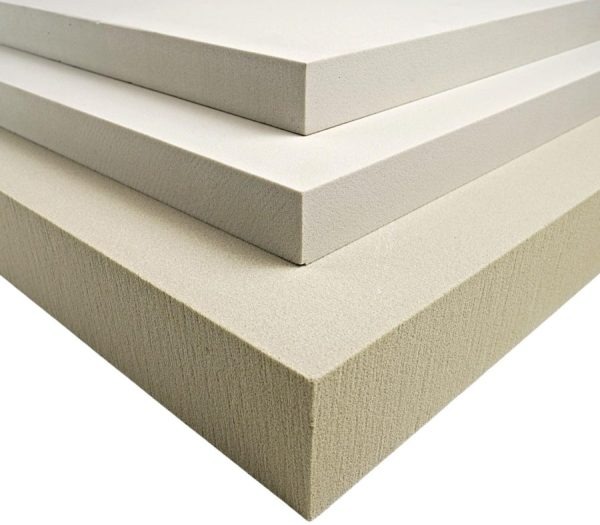
Energy efficiency, fire safety, and long-term durability are no longer optional in modern construction and industrial design. From commercial buildings to cold storage facilities and transport vehicles, insulation materials must perform on multiple levels. This is where polyurethane foam insulation stands out as a high-performance solution designed for today’s demanding environments.
Unlike traditional insulation materials, rigid foams deliver thermal efficiency, structural strength, and manufacturing flexibility in one system. This article explores how rigid polyurethane foam works, where it is used, and why it has become a preferred insulation and structural core material across industries.
Polyurethane foam insulation is a closed-cell insulation material engineered to reduce heat transfer while remaining lightweight and strong. It is manufactured by combining chemical components that expand into a rigid cellular structure, trapping gas inside microscopic cells. This structure is what gives the foam its outstanding thermal performance.
Rigid polyurethane foam is commonly supplied in sheets or precision-cut components and can be bonded to many surfaces, including metal, wood, plastics, and composites. Because of its versatility, it is widely used in construction, transportation, refrigeration, and industrial manufacturing.
One of the biggest advantages of rigid polyurethane foam is its extremely low thermal conductivity. With lambda values typically ranging between 0.022 and 0.028 W/mK, it outperforms many conventional insulation materials.
This means:
- Less heat loss in winter
- Reduced heat gain in summer
- Lower energy consumption over the building’s lifetime
Thanks to this efficiency, thinner insulation layers can be used without compromising performance, helping designers save valuable interior space.
In the construction sector, polyurethane foam insulation is often the first choice for walls, roofs, and floors. CE-marked rigid foam boards are used in both residential and commercial buildings to meet strict energy performance standards.
Its lightweight nature makes installation easier, while its strength ensures long-term dimensional stability without sagging or compression.
Rigid polyurethane foam plays a critical role in refrigeration due to its superior insulation properties. It is widely used in:
- Cold storage rooms
- Refrigerated warehouses
- Isothermal truck bodies
- Composite sandwich panels
The foam maintains internal temperatures efficiently, reducing energy load on cooling systems and ensuring consistent thermal control.
Beyond insulation, rigid polyurethane foam is frequently used as a structural core material. It supports composite panels in industries such as:
- Rail transportation
- Marine and boat building
- Aircraft interiors
- Automotive manufacturing
- Military and defence equipment
With densities ranging from 35 to 200 kg/m³, these foams offer impressive compression strength while remaining lightweight.
Rigid polyurethane foam insulation is not just about temperature control—it also provides excellent mechanical performance.
Key characteristics include:
- High compression resistance
- Excellent strength-to-weight ratio
- Resistance to oils, solvents, and resins
- Long service life even in harsh environments
These properties make rigid foam ideal for load-bearing insulation panels, equipment enclosures, and structural composite components.
For applications where fire safety is critical, phenolic rigid foams offer an advanced alternative. These thermoset materials do not melt, drip, or spread flames when exposed to fire.
Phenolic foams are known for:
- Minimal flame spread
- Extremely low smoke emission
- Very low toxic gas release
They can achieve high European and international fire certifications, making them suitable for high-rise buildings, transport systems, and industrial environments.
Unlike some insulation materials that degrade over time, closed-cell rigid foams maintain their thermal properties for decades. This long-term stability is due to:
- Permanently trapped low-conductivity gases
- Small, uniform cell structure
- Low moisture absorption
As a result, buildings insulated with polyurethane foam insulation continue to perform efficiently without frequent replacement or upgrades.
Moisture is one of the biggest threats to insulation performance. Rigid polyurethane foam offers:
- Low water absorption
- Non-wicking behaviour
- Strong resistance to mould and mildew
Even if moisture enters the system due to damage elsewhere, it remains confined to the affected area rather than spreading throughout the insulation layer.
Rigid polyurethane foam becomes even more valuable through foam conversion processes. Conversion allows standard foam materials to be transformed into highly specialised components.
- CNC profiling and cutting
- Slitting and laminating
- Die cutting and water-jet shaping
- Surface coatings and facings
These processes enable tailored solutions for applications ranging from acoustic control in vehicles to thermal insulation in marine engine rooms.
Sustainability is a growing concern across all industries. Polyurethane foam insulation supports environmental goals by:
- Reducing long-term energy consumption
- Lowering CO₂ emissions from buildings
- Being available in CFC-free and HCFC-free formulations
Its high insulation efficiency means fewer raw materials are required to achieve the same thermal performance as thicker conventional insulation.
- Outstanding thermal insulation performance
- Lightweight yet structurally strong
- Long-term durability with minimal degradation
- Excellent moisture and chemical resistance
- Suitable for insulation and structural applications
- Adaptable through foam conversion techniques
- Supports fire-safe and energy-efficient designs
As construction standards evolve and industries demand higher efficiency, rigid polyurethane foam continues to prove its value. Its ability to combine thermal insulation, mechanical strength, fire resistance, and design flexibility makes it one of the most reliable materials available today.
Whether used in buildings, refrigeration systems, transport vehicles, or composite structures, polyurethane foam insulation delivers long-term performance that meets modern energy, safety, and sustainability expectations.
 Torin
Torin