 By Torin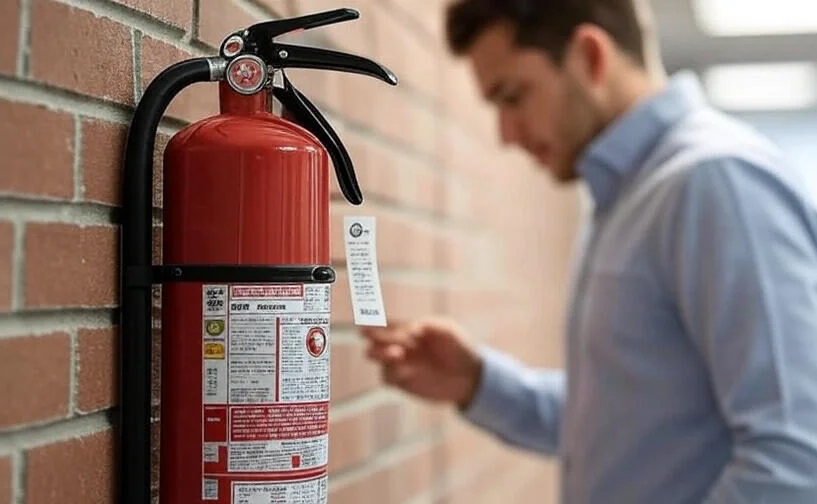
Property managers responsible for multiple buildings carry a quiet but significant compliance burden that rarely makes it into budget meetings or maintenance logs until something goes wrong. Fire safety equipment is one of the most consistently overlooked areas in routine inspections, not because managers are careless, but because fire extinguishers tend to function invisibly until they are needed. What gets missed, often repeatedly, is the condition of the instruction label attached to each unit.
Across commercial properties, multifamily housing, industrial facilities, and mixed-use buildings, the instruction label on a fire extinguisher is the first point of reference for any person attempting to operate the device during an emergency. If that label is faded, peeling, water-damaged, or entirely missing, the information it was designed to convey disappears at exactly the wrong moment. This is not a theoretical concern. It is a documented compliance issue that inspectors across the country flag during annual and semi-annual reviews, and one that creates real liability exposure for building owners and property management companies.
In 2025, with fire code enforcement tightening in several states and third-party audits becoming more common in commercial real estate transactions, getting this specific detail right has moved from optional to operationally necessary. The checklist below is designed to give property managers a clear, working framework for evaluating and managing fire extinguisher instruction label conditions across their portfolios.
The instruction label on a fire extinguisher is a required component under fire safety standards maintained by organizations such as the National Fire Protection Association, which sets the foundational guidelines most US jurisdictions adopt into their local codes. The label is not decorative. It carries operational information that a user must be able to read clearly during an emergency: how to activate the unit, what class of fire it addresses, and any precautions that apply to its use. When this information is absent or unreadable, the extinguisher may technically still function, but the person holding it may not.
For property managers working through compliance reviews, referencing a reliable Fire Extinguisher Instruction Label guide before conducting internal walkthroughs helps establish what a compliant label should include, what replacement thresholds look like, and how to document findings consistently across locations.
The distinction between a cosmetic issue and a compliance issue matters because it determines how a problem is prioritized and resourced. A faded label that passes a quick visual check from three feet away may not pass a trained inspector’s closer review. If the text is unreadable or the pictograms are obscured, the unit can be flagged as non-compliant even if the extinguisher itself is fully charged and mechanically sound.
Most inspection frameworks require that labels be legible, securely attached, and facing outward. When a label fails any of these conditions, the unit is typically considered out of compliance until corrected. This applies regardless of when the extinguisher was last serviced or how recently it passed a hydrostatic test. Label condition is evaluated independently from mechanical condition, which is why it is possible to have a fully functional extinguisher that still generates a failed inspection result.
For property managers overseeing large portfolios, this creates a specific workflow problem. A building might pass its overall inspection but receive a corrective action item tied specifically to label condition. If those items are not tracked and resolved between inspection cycles, they accumulate and create a pattern that auditors will note during future reviews or insurance underwriting evaluations.
Not every worn label needs to be replaced immediately, but several conditions cross a threshold where delay creates real risk. Understanding what those conditions look like in practice helps property management teams make consistent decisions across different buildings and different maintenance personnel.
Extinguishers mounted near windows, in parking structures, or in outdoor equipment enclosures are subject to UV exposure that breaks down label materials over time. The result is a label that appears intact from a distance but becomes unreadable up close. Text fades unevenly, and pictogram contrast drops below the point where a user can quickly interpret the operating instructions. This type of degradation is gradual, which means it tends to go unnoticed until an inspector flags it.
In facilities where extinguishers rotate through outdoor storage or loading dock areas, building a UV inspection note into quarterly walkthroughs prevents this from becoming a recurring corrective action item.
Labels in kitchens, utility rooms, mechanical spaces, and restroom corridors are exposed to moisture, cleaning chemicals, and handling that causes edges to peel, adhesive to fail, and surface materials to deteriorate. Once a label begins peeling from the canister, it is no longer reliably legible and is likely to worsen quickly. A partially attached label is also a practical hazard because it can fully detach during an emergency when the extinguisher is grabbed or moved.
Chemical exposure from cleaning sprays or industrial solvents used in close proximity to mounted units accelerates this type of damage. Property managers in food service facilities, healthcare environments, and manufacturing settings should treat these locations as higher-frequency inspection points for label condition specifically.
A fire extinguisher with no instruction label is always a compliance failure, regardless of the reason. Whether the label was damaged during service, removed during painting, or lost during a unit relocation, the absence of a label must be resolved before the extinguisher is returned to active service. This is a condition that inspectors will flag without exception, and it is one that has straightforward resolution through label replacement rather than full unit replacement.
For property managers responsible for more than one building, label replacement cannot be handled reactively without creating inconsistency. A reactive approach means some buildings maintain compliant extinguishers while others cycle in and out of compliance depending on when they were last inspected. Over time, this inconsistency becomes visible in inspection records and creates the appearance of a broader compliance management problem even when the underlying systems are otherwise functional.
One of the most common reasons label replacement falls through the gaps is that responsibility for it sits between roles. Maintenance staff assume the fire safety vendor handles it. The fire safety vendor assumes the property manager will flag it. No one flags it until an inspector does. Assigning label inspection and replacement as a specific line item in either the internal maintenance schedule or the vendor service agreement removes this ambiguity and creates a clear accountability chain.
For properties serviced by a third-party fire safety vendor, it is worth confirming in writing whether label replacement is included in annual service fees or billed separately. This prevents delays caused by approval processes when a label replacement need is identified during a service visit.
Inspection records for fire extinguishers typically capture service dates, pressure readings, and mechanical condition. Label condition is often not recorded as a separate field, which means it does not appear in historical records and cannot be tracked across inspection cycles. Adding a label condition field to inspection documentation, even if it is a simple notation, creates a paper trail that supports compliance demonstrations during audits or insurance reviews.
Digital maintenance platforms used by larger property management companies often allow custom fields to be added to inspection templates. For companies still using paper or spreadsheet-based records, a dedicated column for label condition is a low-effort addition that adds meaningful documentation value.
The most efficient approach to label replacement is coordinating it with scheduled service visits rather than treating it as a separate maintenance event. When a fire safety vendor conducts annual inspections, any labels identified as non-compliant can be replaced during the same visit. This reduces the number of separate service calls, minimizes disruption to building occupants, and ensures that label replacements are documented alongside the broader service record for each unit.
For this approach to work, the vendor needs to arrive at each inspection with replacement labels on hand. This requires a brief communication step before the visit confirming which locations had label condition issues noted during the previous inspection or during the property manager’s internal walkthrough. Building this communication into the pre-inspection process is a small operational adjustment that prevents gaps from compounding across service cycles.
Replacing a fire extinguisher instruction label is not a technically complex task, but there are several details that determine whether the replacement holds up during a subsequent inspection.
• The replacement label must match the extinguisher type and agent class. A label from a different unit or a generic label that does not reflect the specific extinguisher’s operating instructions creates a new compliance issue rather than resolving the original one.
• The label must be applied to a clean, dry surface to ensure adhesion. Labels applied over residue from the old label’s adhesive or over moisture will fail prematurely and require repeat replacement.
• The label must face outward and be fully readable from the direction a person approaching the unit would see first. Placement matters as much as legibility.
• Any label replacement should be noted in the unit’s maintenance record, including the date of replacement and the person or vendor who completed it.
• If a label replacement is being completed as a corrective action following an inspection finding, confirm with the inspector whether documentation of the correction needs to be submitted before the next scheduled review.
Fire extinguisher instruction label compliance does not require significant resources or specialized expertise. What it requires is consistent attention and a structured process for identifying, documenting, and correcting label conditions before they become inspection findings or liability concerns.
For property managers operating in 2025, the pressure to maintain clean inspection records is coming from multiple directions: stricter municipal enforcement, heightened insurance scrutiny, and increased due diligence requirements in commercial real estate transactions. Each of these factors raises the cost of a compliance gap that could have been addressed during a routine service visit.
Building label condition into existing maintenance workflows, assigning clear responsibility for follow-through, and coordinating replacements during scheduled vendor visits turns this from an overlooked detail into a managed process. The extinguisher on the wall is only as useful as the person who reads its label under pressure. Making sure that label is always there and always readable is a straightforward commitment with a clear return.
 Umar Awan