 By ENGRNEWSWIRE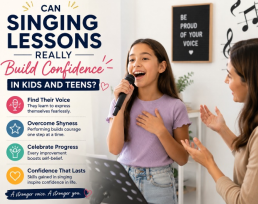
Fall 2026 is just around the corner, and parents across the 6ix are scrambling to fill up after-school calendars. If you’re still considering whether or not to sign up your little one for singing lessons, this guide will walk you through everything you need to know – from the perfect age to start, to what exactly they’ll be learning, and how to pick a program that fits your family, without breaking the bank.
Are Singing Lessons for Kids in Toronto Really Worth It in 2026? Your top questions answered
Singing lessons for kids in Toronto are hands-down one of the best after-school activities you can book for September 2026. Whether you’re looking for singing lessons for a seven-year-old or singing lessons for a Grade 10 student, the benefits go way beyond just learning new songs. A 2024 study highlighted by Toronto Met U found that just two weeks of daily classroom singing for 8- and 9-year-olds knocked the percentage of kids with low well-being down from 41% to a tiny 11%.
At the Toronto Singing Academy, we make singing lessons super easy to fit into those crazy school year schedules: weekday sessions after 3:30 PM, early evening times for teens, and Sunday options for families who commute from all over the GTA.
Three reasons parents keep coming back to us: first, our singing lessons give kids a huge confidence boost and help them express themselves in new ways every week. Second, voice training helps develop skills that come in super handy for school performances: diction, breath control, language clarity – you name it. Third, our singing lessons give kids a chance to make some awesome friends and connections through shared showcases and group events.
We offer both in-person and online singing lessons across the city, so whether you’re in Vaughan, North York, Etobicoke, Scarborough, or downtown, your family can take voice lessons in the format that works best for you. Below, we’ll be answering your top questions about singing lessons for kids in Toronto.
What Age Should Kids Start Singing Lessons in Toronto?
The good news is that kids as young as 7 can really benefit from structured voice lessons. By that age, their attention spans are long enough to make a 30-minute session fly, and their vocal cords are developed enough for gentle technical work. Voice lessons for kids can start as young as 5, but at that stage, the focus is more on having fun and playing games than on formal technique.
Here’s how we structure our singing lessons for different age groups at the Toronto Singing Academy:
Ages 4-6: Kids learn the basics of singing through play. Rhythm clapping, call-and-response games, and simple pitch matching keep things fun and light, with no pressure to hit the high notes just yet.
Ages 7-9: Beginner singing lessons focus on listening, matching pitch, posture, and getting kids comfortable with using their voice. Lessons are typically 30 minutes long.
Ages 10-13: Our singing lessons for this age group cover more in-depth vocal training, including breath control, basic theory, ear training, and early performance skills. Sessions stretch to 45 minutes.
Teens: We move on to more advanced techniques, style exploration (pop, R&B, musical theatre), audition prep, and developing stage presence.
Fall 2026 is the perfect time for Grade 2-9 students to start singing lessons, as it gives them the full year to build technique before those winter concerts and spring musicals. And don’t worry if your high school student is a new beginner – we’ve got success stories from students who joined us in September and saw huge improvement by March Break.
What Will My Child Actually Learn in Singing Lessons? (It’s not just about singing songs!)
We know you want to know what you’re getting for your money. Our singing lessons are tailored to each student’s musical interests and goals, but every single one of them builds a core set of technical skills and broader musicianship.
What will your kid learn in singing lessons?
- Breath control and posture: We teach kids how to use their diaphragm to breathe for healthy singing, and our voice lessons improve breath control and posture from day one.
- Pitch accuracy and vocal control: Kids learn to match pitches and control their voice through singing lessons, starting with single-note matching and progressing to intervals and harmonies.
- Basic music theory: We cover the basics: keys, rhythm subdivisions, song structure, and counting in at a steady tempo with digital backing tracks or piano accompaniment.
- Diction and clarity: Kids learn vowel formation, consonant articulation, and lyric intelligibility, especially helpful for second-language learners.
Our voice lessons get kids’ pitch accuracy and musical understanding on track in no time – not months! And – an added bonus – they carry over into other music lessons and classroom work. An example of a Grade 5 student who starts in September 2026 will spend the first few weeks getting comfortable with basics – posture and breath, weeks 5-8 getting into a pop chorus, and by December they’ll be singing a whole song with proper breathing and a simple harmony line. The lesson plans can cover a wide range of popular singing styles – pop, classical voice, musical theatre – and our coaches cater their teaching to whatever your kid is into.
Can Singing Lessons Really Build Confidence in Kids and Teens?
Private voice lessons are a safe space for shy kids to experiment – no noise from the classroom, no competition from their louder classmates. And because you get immediate feedback from your teacher – “try this”, “change that” – kids start to see real results pretty quickly. That’s helpful for building confidence, because it lets kids know that the hard work is paying off.
Singing has a cool side effect, though – it can make kids a bit more emotionally resilient. Over the course of a year of singing lessons, kids start to notice the progress they’re making – they’re mastering tricky notes, they’re finishing whole songs, they get genuine encouragement from their teacher. And gradually, that confidence starts to spill over into everyday life – school, presentations, social stuff. And when kids get up on stage for a showcase, it’s not just about performing – it’s about seeing how far they’ve come.
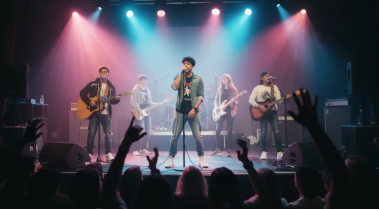
Toronto Singing Academy offers free performances twice a year at real venues – that’s a chance for students to get stage experience, work on their nerves in a low-key way, and start to see themselves in a new light. I’ve seen kids go from being absolutely terrified of singing in front of anyone to owning the stage by the time they’re in Grade 7. And once they get that confidence, it starts to spill over into all sorts of other areas – school presentations, group projects, public speaking.
Can Singing Lessons Help with School Musicals, Choirs, and Auditions in Toronto?
Lots of parents in our area are already thinking ahead to school musicals, choir auditions, and other performance opportunities. Our singing teachers are great at helping students learn the skills they need for all of those – musical theatre, choral singing, auditioning for the arts programs.
For elementary and middle school choir auditions, we work on blending, intonation, and other group-singing skills that make kids stand out. For school musicals, roles like Matilda, Annie, High School Musical, and Frozen Jr. are popular – our coaches help students with characterization, projection, and acting through song. And for high school arts program auditions, we help students pick their material, rehearse with piano tracks, and get the skills they need to nail their performance.
Our summer camp gives kids a bunch of performance opportunities – open mic nights, live shows, rehearsal for school or community theatre auditions. And since our lead time is around 8 to 12 weeks for big auditions or shows, starting lessons early really helps.
How Do Singing Lessons Protect a Changing Teen Voice?
Parents are often worried about their kid’s voice changing during puberty – voices cracking, vocal cords straining. That’s all totally normal, but with proper training, kids can avoid some of those problems. Our coaches specialize in teaching teens how to develop their voices safely – gentle warm-ups, avoiding repertoire that’s too hard, focusing on good breath support. We never push kids into singing things that are beyond their reach – and we make sure they’re hydrated, rested, and practicing safely.
That structured approach helps prevent problems down the line – chronic hoarseness from screaming in sports, damage from over-singing. And if a kid’s voice is still changing, we take it really slow and make sure they’re getting the support they need.
Are Singing Lessons Good for Complete Beginners (Even If My Child “Can’t Sing”)?
If your kid’s never sung before, or if they’re worried about being bad at it, just start with the basics. Get them comfortable with posture, breathing, and some simple songs. Our coaches will work with them to find a style that fits – pop, classical, musical theatre. And soon, they’ll be singing along with their favourite songs – or maybe even writing their own music. My kid loves singing but they’re completely off-key. They’re mortified about their voice, and to be honest, they’ve never even had music lessons before. Here are the top three concerns that parents raise and they’re all pretty much non-starters.
Loads of kids and teens at Toronto Singing Academy start from absolute scratch with no experience and no choir background to speak of. Our beginner singing lessons and voice lessons in the Startup Vocal Program focus on getting that single note right, then building up short patterns; getting a comfortable relaxed sound instead of just bellowing loudly; and introducing a small achievable song first to start seeing some quick results.
People usually think having a “tin ear” (properly known as clinical amusia) is an insurmountable problem , but only about 1.5% to 4% of the population actually have it. Most of the kids who are singing off-key are just not yet developed enough to listen and coordinate breath and pitch. Those are skills that can be learned, not fixed traits. We place a big emphasis on encouragement, clear goals , and small weekly improvements in our award-winning voice lessons , which is especially important for nervous beginners.
Its perfectly okay if the first lesson (or the first month) feels a bit awkward. By late fall 2026, a lot of our new vocal students will sound a whole lot more in tune and confident than when they started in September.
In-Person vs. Online Singing Lessons for Kids & Teens in Toronto
Singing lessons can be done both in-person and online at Toronto Singing Academy .
Here’s how they compare.
In person at our Toronto studio: We have modern teaching rooms, top-notch equipment and the teacher can give real-time feedback on posture , breathing and stage presence. Far fewer distractions than at home. It’s great for getting the student to engage physically with movement, gestures and mic practice. It also makes it easier to do live performances and recitals.
Online singing lessons: Live video sessions using a laptop or tablet. Online singing lessons are available to anyone of any skill level and can be done from anywhere in Toronto. We offer flexible scheduling options that work for families in outer GTA neighbourhoods or with busy schedules. Online lessons still get you the personalized instruction tailored to your goals, just like in-studio sessions. Teens who are comfy with tech and have a good USB mic or earbuds tend to pick up quickly.
If needed , students can switch from in-person to online temporarily because of bad weather , illness or exam weeks without losing momentum. A simple rule for parents: younger kids (7 to 10) usually do best starting in person so the teacher can see how they’re standing and breathing. Tweens and teens who are responsible can do well online, especially for ongoing voice training once the basics are established.
How Singing Lessons Fit into After School Life in Toronto in 2026
Singing lessons are one of the most hassle-free after-school activities you can add. No lugging a big instrument around, no fancy uniform. All your kid needs is a notebook, a water bottle and sometimes a phone or tablet for lyrics and backing tracks.
At Toronto Singing Academy, typical scheduling options are on week days around 3:30 to 4:00 p.m. for younger students; early evening times (5:00 to 8:00 p.m.) for teens after clubs or sports; and Sunday daytime slots for busy families or those commuting downtown.
Compared to competitive sports with multi-hour practices, travel teams and weekend tournaments , taking singing lessons requires a tiny fraction of the logistical overhead. Practice at home is just 10 to 20 minutes a day for kids and younger teens, enough to keep making progress and easy to fit in before or after homework.
Our flexible scheduling and month-to-month enrollment lets families adjust around big school events like exams, IB or AP tests and science fairs without losing their spot. Singing lessons fit in with the school year – they don’t get in the way.
What Should Parents Look For in a Kids’ Vocal Program or Music School in Toronto?
Finding the right vocal teacher is all about matching up your child’s age and goals. Most music schools in Toronto offer singing lessons for kids, but not all programs are equal. Here’s our checklist.
Teacher credentials and focus: Look for a singing school that’s specialized in vocal training rather than some other music school that just happens to offer voice lessons as well. Make sure the teachers have a proven track record working with kids and teens, not just adult students. The right teacher is super important – a good match for a shy eight-year-old is a different story to a good match for a driven sixteen-year-old.
Age-appropriate methods: A good vocal technique needs repertoire that suits each student’s development. Ask if the school takes care to protect young voices from adult belting and if teaching styles adapt to different personalities: shy , energetic , neurodiverse or very driven.
Environment: A supportive environment with no shame and no comparing with other kids is essential. The studio culture should work for every learning style. Program features to ask about – Don’t Forget to Ask About :
What kind of regular free performances or live recitals can my kid look forward to & how will these goals help them stay motivated? How will you keep me in the loop about my kid’s progress & what are the expectations for practice? And – if for some reason the fit with one of your teachers doesn’t quite click – is there a guarantee you’ll help us switch to someone who’s a better match?
Toronto Singing Academy hits all these criteria – with dedicated vocal coaches, a modern take on music styles that kids love (pop, rock, R&B, musical theatre, country, gospel), regular free shows at great venues, AND flexible options for in-person or online lessons. Book that introductory lesson for fall 2026 and see the place for yourself!
What to Expect at Your First Lesson at Toronto Singing Academy
Getting familiar with what a typical first lesson is like takes away some of the mystery (and the nerves). Here’s what happens right from the minute your child shows up or logs in for their first lesson
5 minutes in, we get a quick chat. The voice teacher wants to know about your kid’s favorite artists (Olivia Rodrigo, Taylor Swift, Harry Styles, K-pop groups, Disney soundtracks) – and if they’ve had any music experience before. This helps us tailor the whole lesson on the spot.
Next up: some gentle warm-ups (5 to 8 minutes). Simple scales and breathing exercises that don’t label anything as “good” or “bad” – the teacher is just quietly checking in on where your kid’s at with pitch, tone, rhythm and confidence.
Then, we try out a short, familiar song (10 to 15 minutes). Singing a song your kid already knows helps them feel more comfy fast – and the teacher’s making adjustments in real-time, with just a couple of small corrections rather than a long list.
Last but not least: some clear goals (3 to 5 minutes). The teacher lays out a few clear targets for the next 6 – 8 weeks, like “sing this full song with good breathing and clear words by November” – and if your kid’s a bit younger, you get to stick around and observe; with teens, the teacher usually catches up with you in the last few minutes.
Lesson lengths vary: 30 minutes for most under 12, with 45 to 60 minutes recommended for the more motivated teens. Lessons run weekly during the school year – and it’s normal for a student to feel a bit shy at first. By lesson three or four, most kids are chatting easily with their vocal coach and singing more freely.
Why Choose Toronto Singing Academy for Your Kid’s Vocal Adventure in 2026/2027?
At Toronto Singing Academy, we focus on what we do best: singing lessons and vocal lessons for modern styles as an elite music academy with a real specialty in the voice. We cover all the modern styles your kid will love: pop, rock, R&B, country. And – we’re not just general music studio that tries to teach everything; we specialize in the voice.
One-on-one lessons with experienced vocal coaches and voice instructors who know how to connect with young voices & teen goals. Live free performances in top Toronto venues twice a year – plus some open mic events. We’re flexible too, with month-to-month enrollment & both in-person and online options.
Our teaching adapts to every student: whether they’re a shy beginner just exploring themselves through a Disney ballad or a driven teen with their sights set on making it big by prepping demo records & recording studio prep. We put vocal health first at every stage.
Book popular after-school slots for September 2026 now, because they fill up fast! Get your child into a fun, confidence-boosting activity for the 2026/2027 school year.
Your Back-to-School Checklist: Get Your Kid Ready for Their First Singing Lesson
Here’s a quick reference guide to share with your family before September:
Choose a format: In-person at our Toronto studio, or online from home. Best to start with in-person lessons for kids under 10, but teens can start online if they’ve got a quiet space and a decent USB mic.
Pick some songs: Talk with your kid about their favorite artists & songs to share with their voice teacher. This helps make the lesson feel more personal & less generic.
Set up a regular time slot: Make sure it fits in with school, homework & other after-school activities. Consistency is more important than marathon sessions.
Gear up: Get a dedicated notebook or folder for practice notes & lyrics. A reusable water bottle’s a good idea too. If you’re doing online lessons, consider some earbuds and a small USB mic – and a phone or tablet for backing tracks & lyrics.
Find a practice space: Create a quiet, comfy spot at home where your kid feels safe singing without feeling overheard or judged. A bedroom with a closed door works just fine.
Set a performance goal: Mark the date of the next Toronto Singing Academy free performance on your calendar so your kid’s got a clear target to aim for early in their musical journey.
Singing lessons for kids in Toronto in 2026 aren’t just another after-school activity—they’re a practical and rewarding way to build confidence, creativity, self-expression, and a lifelong love of music. At Toronto Singing Academy, getting started is easy. Whether your child is a complete beginner or already loves to sing, our customized one-on-one singing lessons are designed around their individual voice, goals, and skill level.
Interested in learning more? Visit our website: https://torontosingingacademy.com/ to explore our kids and teens singing programs and get started today by booking a vocal assessment or contacting us for more information. It could be the first step in helping your child discover just how much their voice can do!
 Torin
Torin