 By Torin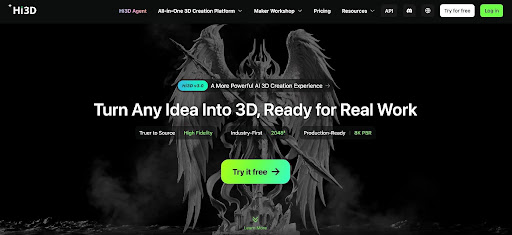
Photography has always involved choices.
Where should the camera go?
How should the subject be positioned?
Which lens should be used?
Where should the light come from?
What should appear in the background?
These decisions become even more complicated when the subject is difficult to photograph. A product may only be available in one location. A physical object may be expensive to transport. A particular composition may require repeated shooting and extensive preparation.
Three-dimensional technology offers another way to approach these problems.
Instead of photographing every subject from scratch, creators can sometimes work with a digital 3D representation. The virtual object can be rotated, repositioned, resized, and placed in different environments.
AI 3D generation makes this approach more accessible by helping creators turn visual references into three-dimensional assets without necessarily starting with traditional manual modeling.
The result is not a replacement for photography.
It is another creative space where photography and 3D visualization can overlap.
Traditional photography captures a specific moment from a specific viewpoint.
Once the photograph has been taken, changing the camera position is no longer possible.
A 3D object works differently.
The camera can move around it.
The object can be rotated.
The distance between the camera and subject can change.
The background can be replaced.
Lighting can be adjusted.
This flexibility creates opportunities for visual experimentation that are difficult to achieve with a single physical photograph.
For some creative projects, that can be more valuable than simply producing one realistic image.
The first challenge is obtaining the 3D object.
For experienced 3D artists, building a model manually is one option.
For other creators, this can be a significant barrier.
AI image-to-3D generation provides another route.
A photograph or illustration can serve as the starting point for a three-dimensional interpretation.
Hi3D supports image-to-3D generation using single-view or multi-view references, allowing creators to begin with visual material they already have.
The generated asset can then become part of a virtual photography workflow.
It does not need to be a perfect digital replica to be useful.
For many creative projects, the goal is simply to obtain a convincing three-dimensional subject that can be explored from different angles.
One of the most interesting differences between photography and virtual photography is the camera itself.
A physical camera is constrained by the real environment.
There may be limited space around the subject.
A particular angle may be difficult to achieve.
The photographer may need special equipment to reach a certain position.
With a digital 3D scene, those physical restrictions become less significant.
The camera can be positioned above the object.
It can move closer.
It can be placed unusually low.
It can explore angles that would be inconvenient or impossible in a real studio.
This makes 3D particularly useful for experimentation.
Composition often requires trial and error.
A subject may look balanced in one arrangement and awkward in another.
The background may be too busy.
The subject may need more empty space around it.
A different camera angle may create a stronger visual hierarchy.
In a physical studio, every change takes some effort.
The object may need to be moved.
The lights may need adjustment.
The camera may need to be repositioned.
In a virtual environment, many of these changes can happen without physically rebuilding the setup.
This allows creators to explore more compositions before settling on one.
Advertising photography often involves carefully constructed scenes.
A brand may want a dramatic composition that would be difficult to create physically.
A campaign might require unusual environments.
A product may need to appear in several different settings.
A creative team may also need multiple visual variations for different formats.
Three-dimensional assets can provide another way to approach this.
Instead of producing every variation as a separate physical shoot, creators can build a virtual scene and experiment with different compositions.
The same underlying asset can support multiple visual directions.
The relationship between a subject and its environment can completely change the meaning of an image.
The same object may feel luxurious in one setting and playful in another.
A dark environment may create a dramatic mood.
A bright, minimal background may make the subject feel cleaner and more modern.
With a 3D workflow, the subject can remain consistent while the surrounding environment changes.
This makes it possible to explore different creative directions without rebuilding the central object each time.
Lighting is one of the defining elements of photography.
It affects shape, texture, depth, mood, and attention.
A physical photography setup requires real lights and physical positioning.
A virtual scene provides another kind of flexibility.
Creators can experiment with the direction and intensity of light while observing how the digital object responds.
This can be especially useful during concept development.
Instead of asking whether a particular lighting idea might work, the creator can test it visually.
The goal is not necessarily to reproduce a real studio perfectly.
It is to explore how light changes the appearance of the subject.
Some visual ideas are difficult to capture physically.
Perhaps the subject needs to be viewed from directly above.
Perhaps the camera needs to sit almost at ground level.
Perhaps the composition requires an extremely close perspective.
A physical setup may require specialized equipment.
A virtual camera does not have the same physical constraints.
This creates a useful space for visual experimentation.
Creators can try unusual perspectives simply to see what happens.
Some experiments may fail.
Others may reveal a composition that would not have been considered otherwise.
A physical photoshoot often produces a collection of images.
A 3D asset can potentially produce an even broader range of visual outputs.
The same model can be viewed from different angles.
It can be placed in different scenes.
It can appear at different scales.
Its surface appearance can be adjusted.
Its lighting can change.
This makes the asset reusable.
Instead of treating an image as the final product, creators can treat the 3D model as a reusable visual source.
That difference can influence how creative teams organize their assets.
Consistency can be difficult when every image is photographed separately.
The camera angle may change.
Lighting may differ.
The subject may not be positioned exactly the same way.
For a visual series, these small differences can become noticeable.
A shared 3D asset provides a more controlled foundation.
Different images can be generated from the same underlying model while changing only selected elements.
For example, a creator could maintain the same subject while experimenting with several backgrounds.
Or the same camera composition could be used with different surface treatments.
This creates more control over visual consistency.
Not every project begins with a digital design.
Sometimes the starting point is a real object.
A creator may have a handmade sculpture, an interesting decoration, a physical prototype, or another object they want to explore digitally.
A photograph can provide a visual reference for a 3d model maker ai, helping create a preliminary 3D representation.
This creates a bridge between physical and virtual photography.
The physical object becomes the source.
The 3D model becomes a new creative version of that source.
From there, the creator can experiment without needing the original object to be physically present in every scene.
One photograph only reveals part of an object.
If the back is important, the front image cannot tell the complete story.
If the side profile is distinctive, a front-facing photograph may not be enough.
This is why additional views can be useful when creating a 3D representation.
Hi3D supports multi-view input, with several images of the same subject providing additional visual information.
For creators working with physical objects, taking a few reference photographs from different directions can therefore provide a stronger starting point for the 3D generation process.
Traditional photography sometimes requires a carefully built set.
A particular environment may need walls, furniture, decorative elements, props, and lighting.
Building that set can take considerable time.
A digital environment offers another possibility.
The scene can be constructed virtually.
Objects can be placed without physically transporting them.
The composition can be changed without rebuilding the room.
This does not make virtual photography appropriate for every project.
Real materials and physical environments still have qualities that digital scenes cannot fully reproduce.
But for concept work and certain types of visual content, the flexibility can be valuable.
Photography normally records the scale relationships that exist in the real world.
A small object is small.
A large object is large.
In a virtual environment, scale becomes more flexible.
A digital object can be enlarged dramatically.
It can be reduced.
It can be placed next to other objects to create unusual relationships.
This can produce visual concepts that would be difficult to photograph physically.
Scale can become a creative tool rather than simply a physical limitation.
Virtual photography is not limited to photorealism.
Creators may want a surreal scene.
They may prefer a highly stylized object.
They may want exaggerated colors or unusual textures.
An ai 3d model texture generator can support these experiments by allowing creators to work with different forms and surface treatments.
Hi3D includes stylized texture capabilities that can be used to explore different visual directions.
This makes the 3D asset more than a digital copy of a physical object.
It can become an interpretation of that object.
Photographers often pay close attention to surfaces.
A rough surface catches light differently from a smooth one.
A reflective material produces different highlights.
A patterned surface can create visual interest.
In a digital scene, texture plays a similar role.
Changing the texture can change how the entire object appears under the same lighting.
This creates another dimension of experimentation.
A creator can keep the shape constant while exploring different material directions.
Sometimes the purpose of a virtual image is not to replace a photoshoot.
It is to prepare for one.
A creative team may have a general concept but be uncertain about the composition.
A rough 3D scene can help test the idea.
The team can experiment with camera positions, object placement, lighting direction, and background structure.
Once the strongest composition has been identified, the physical shoot can be planned around it.
In this role, 3D becomes a visual planning tool for photography.
Creative teams often generate more ideas than they can immediately produce.
A photographer may imagine an unusual composition.
An art director may have an idea for a campaign image.
A designer may sketch an object that could become part of a future shoot.
Without a practical way to visualize these ideas, they may remain as notes.
A quick 3D concept gives them another form.
It can be saved, revisited, modified, and compared later.
Even if the original idea is never produced, the digital concept can remain part of the creative archive.
Not every virtual photograph needs a highly detailed model.
For distant subjects, a basic asset may be enough.
For close-up compositions, however, surface details become more visible.
Fine patterns, small features, and texture characteristics can influence the final image.
Hi3D V3.0 is designed for high-detail geometry generation and high-resolution PBR texture workflows.
For visual experimentation, this can provide a more detailed starting point when the subject will occupy a significant part of the frame.
The appropriate level of detail still depends on the intended image.
A 3D asset does not have to produce only one image.
The same object can potentially support a range of visual outputs.
A still image can become part of a poster.
Another angle can be used for social content.
A different composition can appear in a presentation.
The model can also be incorporated into animation or other digital projects.
This makes the underlying asset more flexible than a single photograph.
The creator is no longer working only with a finished image.
They are working with a reusable three-dimensional source.
None of this means virtual photography will replace cameras.
Physical photography captures real materials, natural imperfections, genuine environments, and actual light.
For projects where authenticity is essential, photographing the real subject remains important.
There are also creative qualities associated with physical lenses, film, sensors, and real-world environments that digital rendering approaches differently.
The two methods can coexist.
A creator may photograph a real subject for one campaign while using a digital version for another.
The choice depends on the purpose of the project.
The most interesting change may be conceptual.
In traditional photography, the creator starts with the camera and asks:
“How should I photograph this object?”
With a 3D asset, the question becomes:
“How should I position the camera around this object?”
That sounds like a small difference.
In practice, it changes the creative relationship between the photographer and the subject.
The object is no longer fixed in one physical location.
The camera is no longer restricted to the possibilities of a real studio.
Both become elements in a digital space.
Photography has traditionally been about capturing something that already exists.
3D visualization makes it possible to construct an image from digital components.
An object can be generated.
A scene can be assembled.
The camera can be positioned.
The lighting can be adjusted.
The final image can then be created from this virtual environment.
AI 3D generation makes the first part of this process more accessible by helping creators move from visual references to usable three-dimensional starting points.
This expands the meaning of photography without eliminating the traditional form.
The combination of AI and 3D gives visual creators another way to experiment.
Instead of waiting until a complete photoshoot is organized, they can test ideas earlier.
Instead of committing to one composition, they can compare several.
Instead of rebuilding a physical setup for every variation, they can adjust the digital environment.
The process becomes less about capturing one perfect image immediately and more about exploring possibilities.
That can be particularly valuable when the visual direction is still evolving.
As AI 3D generation continues to improve, the relationship between photography, design, and 3D visualization is likely to become increasingly fluid.
A photograph may become the starting point for a 3D asset.
The 3D asset may become the source of many different images.
Those images may then return to traditional creative workflows as references, campaign materials, or production guides.
The boundary between “photographing something” and “building an image” becomes less rigid.
For creators, that means more ways to experiment with composition, perspective, lighting, and visual storytelling.
A camera has always been a tool for controlling what people see.
3D adds another layer of control.
The object can move.
The camera can move.
The environment can change.
The lighting can change.
The scale can change.
And because these changes happen digitally, creators can explore them without rebuilding the entire physical setup every time.
AI 3D tools such as Hi3D make it easier to enter this space by turning visual references into three-dimensional starting points.
The result is not the end of photography.
It is an expansion of what can happen before, during, and after the image is created.
Instead of asking only what the camera can capture, creators can begin asking a broader question:
That question opens up a much larger creative space.